Artsy - Enhancing Museum Experience & Personalization
Artsy personalizes museum visits, aggregates ticketing across venues, and turns static exhibits into connected stories, especially for visitors in unfamiliar cities.
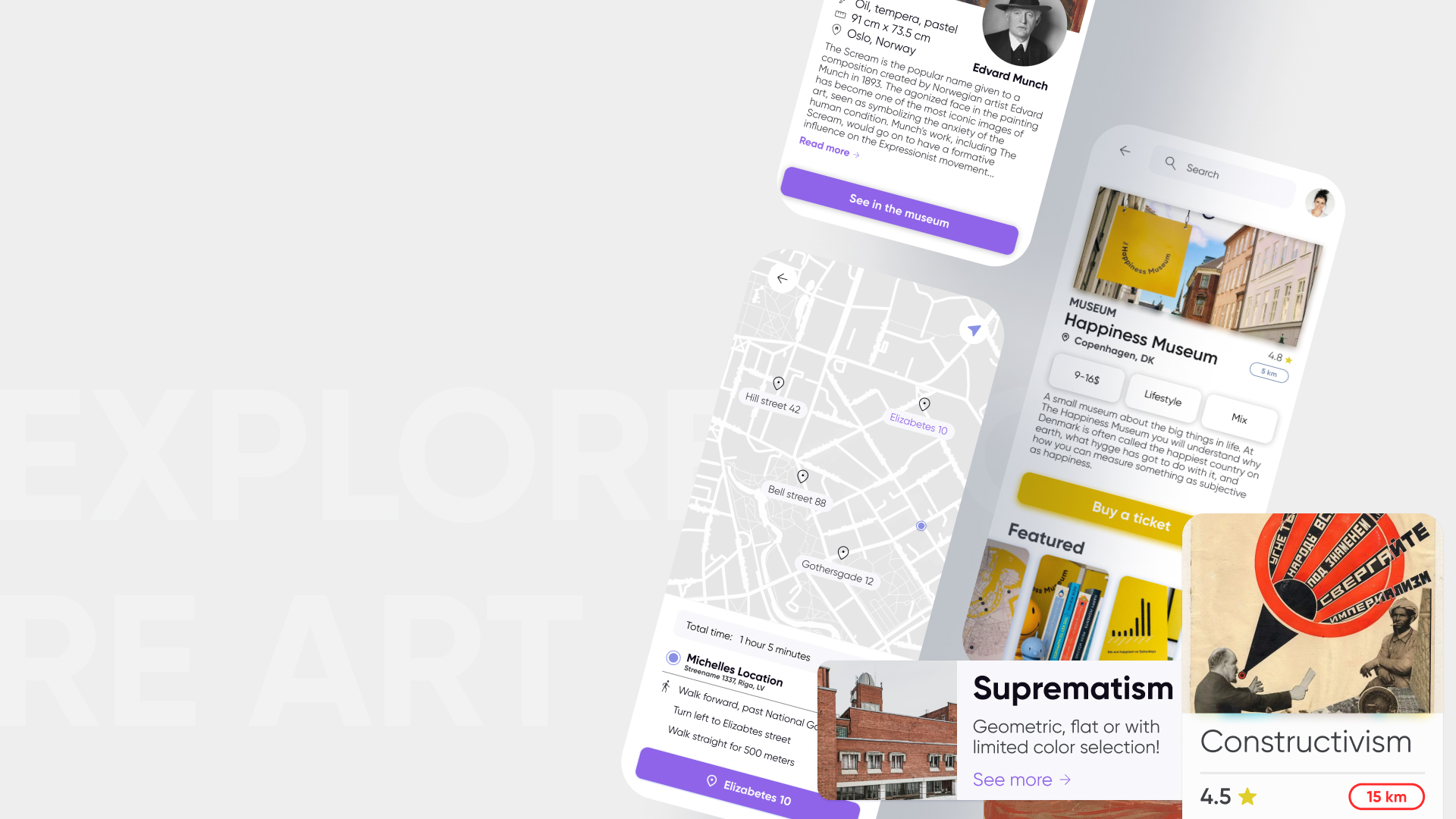
What I did
Product/UX Designer using Figma (mobile), Paper sketching
What changed
Personalized Guided Tours / Art Database / Ticket Aggregation
The Problem
The current art-presentation scene is perceived as elitist and hard to access. People want to learn about art but often don’t know where to begin or find nothing personal to connect with. Ticket pre-orders can be confusing, and exhibit storytelling feels inconsistent and impersonal.
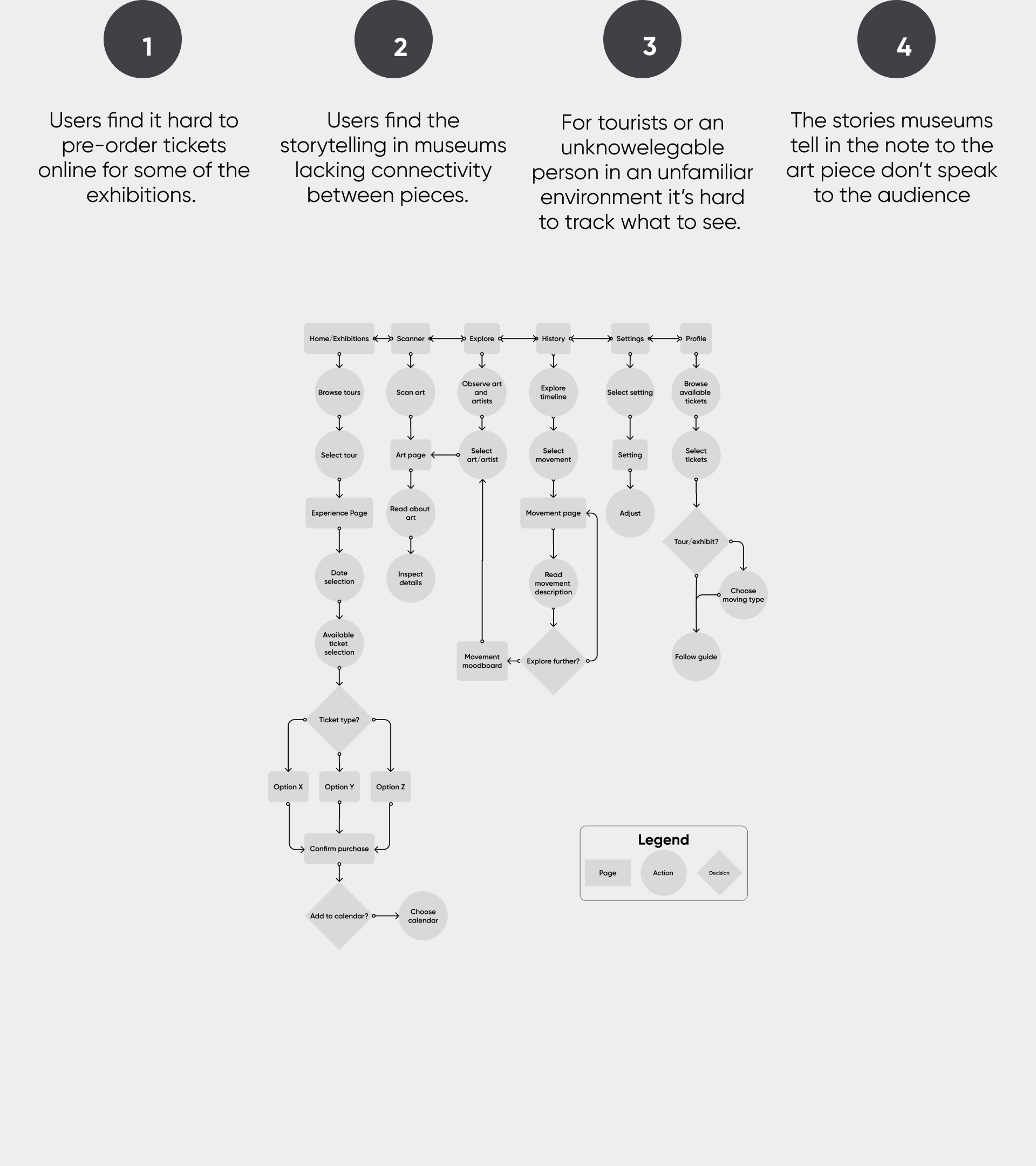
Users struggle to pre-order tickets online for some exhibitions.
Museum storytelling lacks connectivity and personality between pieces.
In an unfamiliar environment, it’s hard to plan what to see and navigate.
Notes beside artworks rarely explain process, artist insight, or ideation, so stories don’t speak to the audience.
The Solution
Create an accessible app offering personalized guided tours and an art database, reducing boredom from generic tours by tailoring experiences to user interests, plus a single aggregator for purchasing tickets.
Key Features:
Research
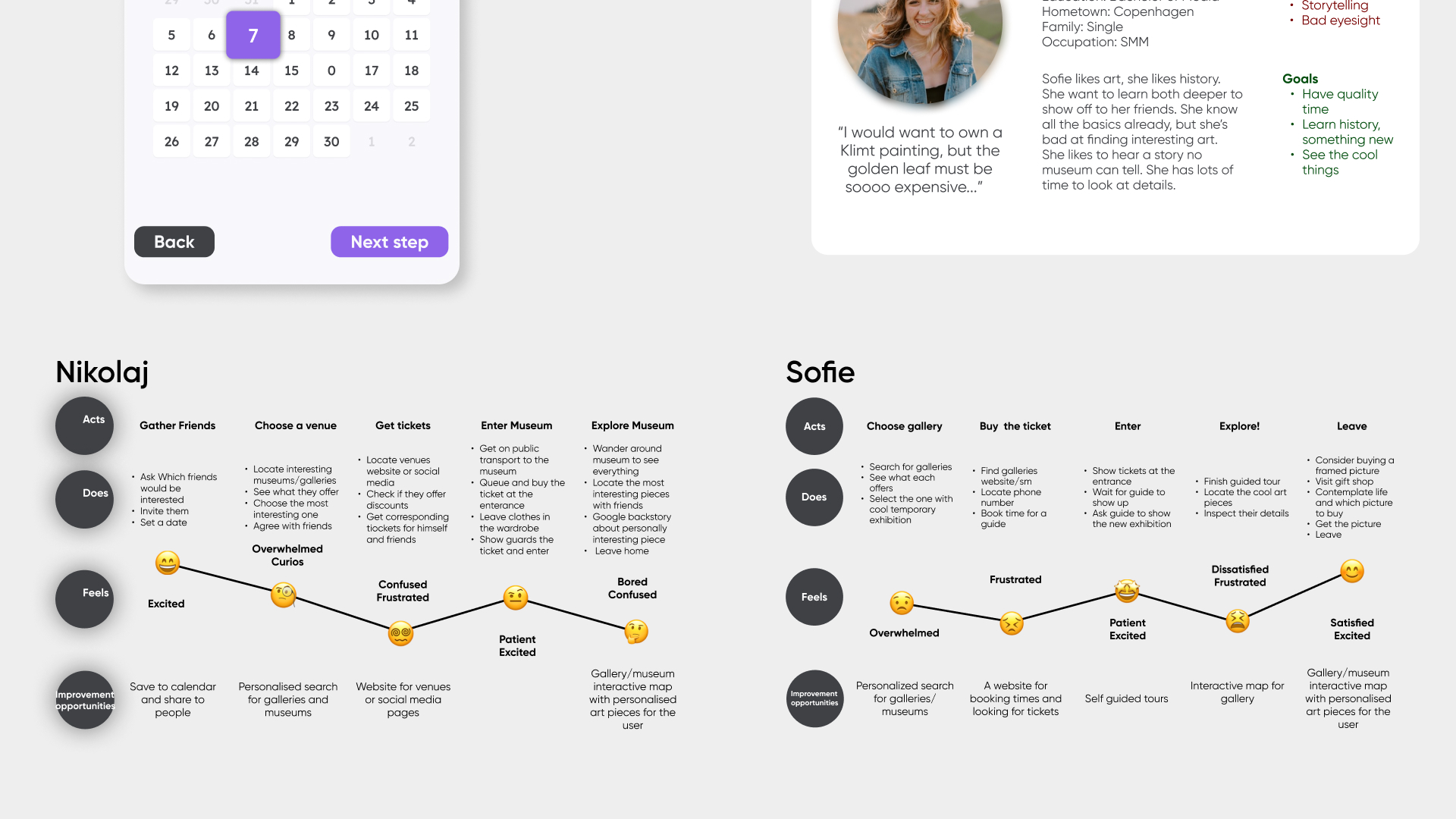
We conducted 12 interviews (5 male, 6 female, 1 queer) to surface needs, goals, and frustrations across visitor types. This helped us understand the various pain points museum visitors experience and how we might address them.
Personas
Sofie (26, Copenhagen, SMM)
Loves art and history, wants deeper stories to share with friends; struggles with queues, navigation, superficial trivia, and inconsistent storytelling; bad eyesight noted.
”I would want to own a Klimt painting, but the golden leaf must be sooo expensive…”
Nikolaj (26, Vilnius, Barista)
Visits with school/friends; cares more about interactive experiences than content depth; needs student discounts, good interaction design, and not to feel lonely.
”Art is something you have to experience and try yourself before talking about it…”
Albert (50, Berlin, Surgeon)
Tight schedule; family-oriented outings; seeks behind-the-scenes, process, and author’s perspective; hates crowds and ticket-finding friction.
Journey Highlights
Design Process
Ideation
Running creative exercises to explore solution spaces
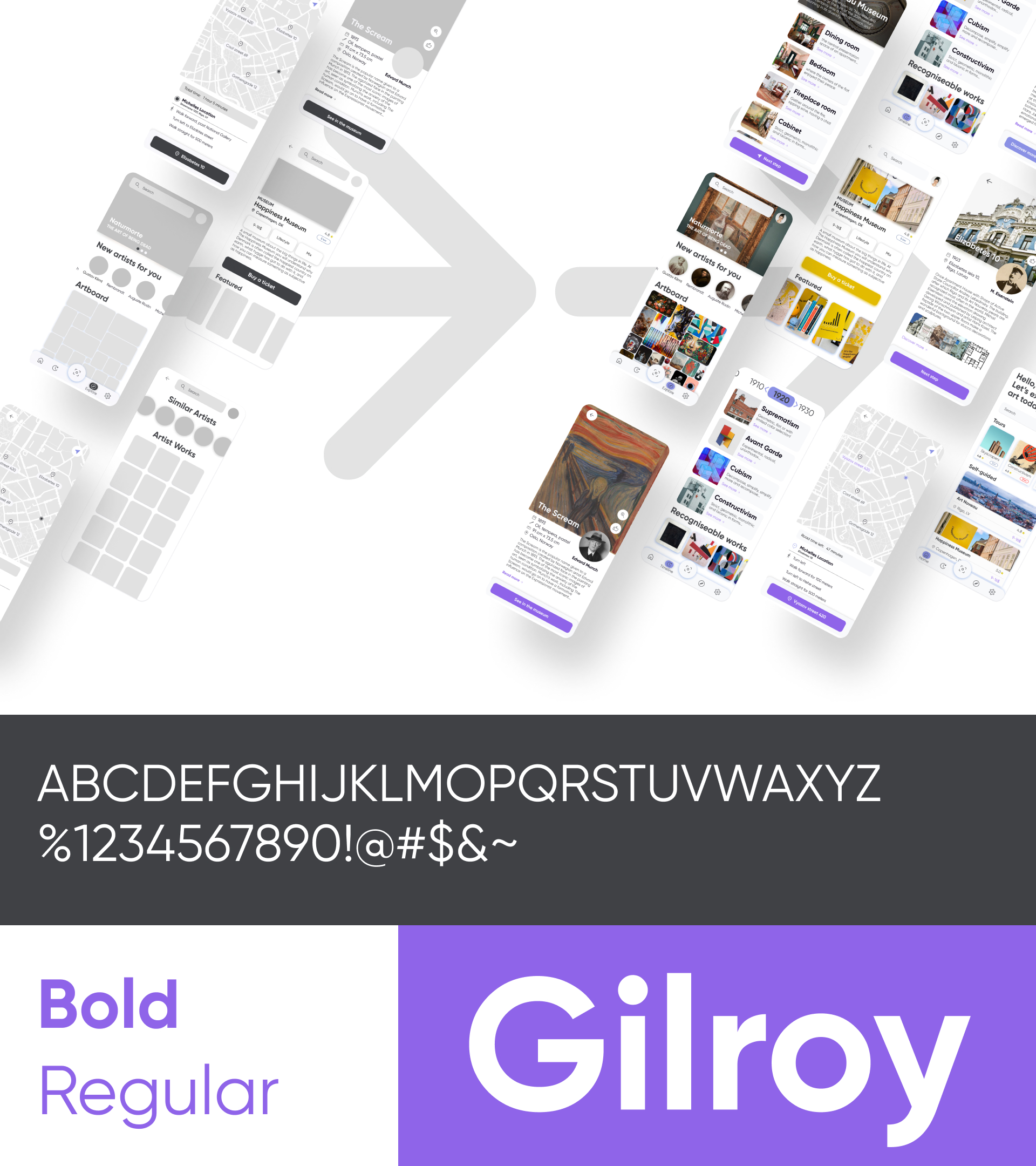
Low-Fidelity Wireframes
Paper sketching for rapid iteration
High-Fidelity Prototype
Creating a detailed mobile prototype in Figma
Visual Direction
Establishing typography and stylistic elements
Typeface: Gilroy (Regular & Bold).
Stylistic references: Suprematism and Constructivism—geometric, flat, limited color selections—applied to keep the interface clean, legible, and modern.
Proposed Experience
Personalized Tours
Recommend routes and pieces based on interests (e.g., artist process, WIP, author’s life). Users can select preferences and receive tailored experiences that match their specific interests, making each museum visit unique.
Ticket Aggregator
One place to discover exhibits, compare offers/discounts, and pre-order tickets. This solves the frustration of navigating multiple websites for different venues and ensures a seamless booking experience.
Interactive prototype
In-museum navigation with highlights for each persona’s goals (e.g., deep stories vs. playful interactions). The interactive maps help visitors navigate unfamiliar spaces confidently while calling attention to content that matches their personal preferences.
Persona-Based Features
Each feature was designed to address specific needs of our research-derived personas, ensuring the app would provide real value to different types of museum visitors.
For Sofie
- •Deep stories about artwork and artists
- •High contrast text for better readability
- •Social sharing of discoveries
For Nikolaj
- •Highlight interactive exhibits
- •Student discount filters
- •Group coordination features
For Albert
- •Behind-the-scenes content
- •Quick-purchase ticket option
- •Family-friendly tour suggestions
Outcomes
Validated Prototype
Refined through user feedback and heuristic evaluation
Clear Design Targets
Research-based priorities for addressing user pain points
Actionable Solutions
Focused backlog aligned to primary user needs
The high-fidelity prototype let us refine content, interactions, and visuals against real user feedback and heuristics, providing a tangible rendering of the final experience. Our research sharpened priorities: fix ticketing friction, connect stories between pieces, and support visitors in unfamiliar contexts. This led to a focused backlog around personalized tours, ticketing aggregation, and interactive navigation, aligned to the primary issues and persona needs.